Your First Public Skate on Rental Skates: Lacing, Falling and Getting Back Up
A plain walk-through of a first session on the ice, from picking socks to standing up after your first fall.
October 16, 2026 · 4 min read
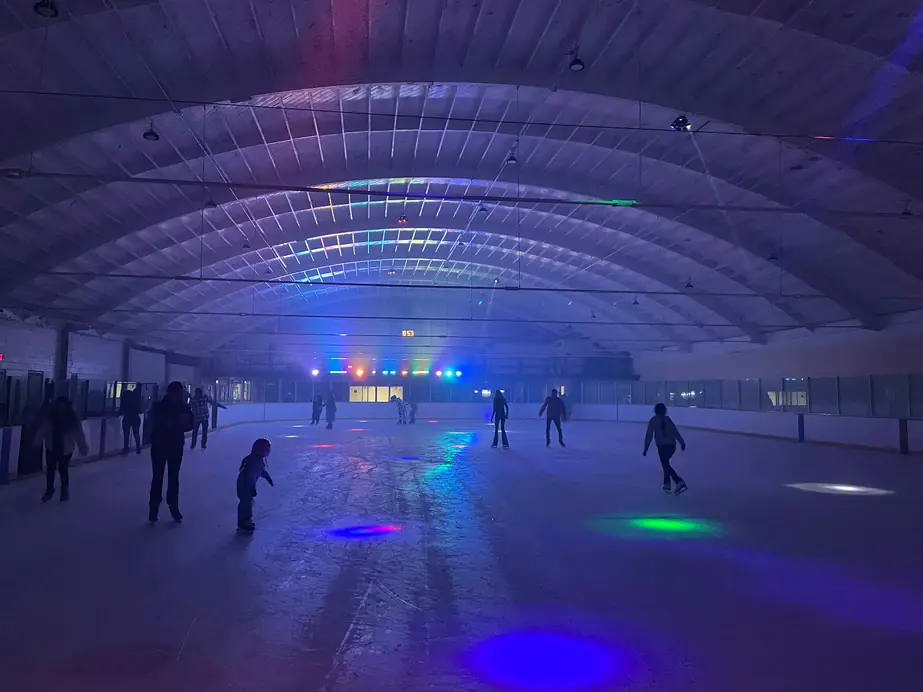
The first few minutes on ice feel strange for almost everyone. Your feet slide when you did not ask them to, the boards look very far away, and a nine-year-old glides past like it is nothing. That is normal. Most first-timers settle in faster than they expect, especially when they know what the afternoon looks like before they walk in. This guide takes you through a first public session at Ontario Ice Skating Center on West Holt Boulevard, from the parking lot to handing your skates back.
What does a public session cost?
Public admission with skates is $16.00. If you already own skates and bring them, admission is $14.00. Those are the current prices on the rink's session page. If you remember an older, lower number from a friend or an old flyer, trust the current one and ask when you call.
Public sessions run in the afternoons through the week, and there are Disco night sessions on Friday and Saturday evenings with colored lights across the ceiling. Session times shift by day and by season, so call 909-986-0793 or text 909-935-9023 to confirm times before you drive over. While you have someone on the line, ask which session suits a first-timer best.
What should you wear?
Dress for a cold room where you will still work up a sweat. Stretchy pants or leggings let you bend your knees freely. Jeans are fine, but stiff denim fights you on every squat. Wear a light layer you can peel off, because a rink feels cold when you walk in and warm after twenty minutes of effort. Gloves are a good idea even if you never fall, since they keep your hands comfortable on the boards.
Socks matter more than people think. Wear one pair of thin or medium socks that reach above the top of the boot. Thick socks bunch up inside a rental skate, loosen the fit and rub your ankles raw. Skip the double layer.
How do you lace rental skates?
Tell the staff your shoe size and that this is your first time on skates. Then sit down to lace. Standing on carpet in skates is the first balance test of the day, so give yourself a bench and take your time.
- Loosen the laces all the way and pull the tongue forward before you slide your foot in.
- Tap your heel back into the boot so your foot sits as far back as it will go.
- Lace snugly and evenly through the ankle, where the boot gives you support.
- Leave the toes and the very top hooks a little looser so you can bend your knees.
- Tie a double knot and tuck the loops into the boot so nothing catches.
- Stand up, bend your knees and check that your heel stays down. If it lifts, relace.
A good rental fit feels firm but never painful. Your toes should barely touch the end, and your ankle should feel held rather than wobbly. If a boot feels loose or squeezes one spot, say so before you step on the ice. A different size is a thirty-second fix. Blisters last all week.
Taking your first steps on the ice
Walk to the entrance on the mats, keep your hand on the boards and step onto the ice with one foot at a time. Stand with your knees bent and your weight over the middle of your feet. Lean forward slightly from the ankles, not from the waist. Hold your arms out in front of you, a little wider than your hips, like you are carrying a tray.
Start by marching in place with small steps, toes turned slightly out. When that feels steady, push gently off one foot and let the other glide for a second or two. Look ahead at where you are going, not down at your feet. Your body follows your eyes, and looking down tips you forward.
How do you fall and get back up?
You will fall at some point, and it is a skill worth practicing on purpose. When you feel yourself going, bend your knees and sit toward the ice instead of stiffening up. Fall to the side if you can, keep your chin tucked so your head stays away from the surface, and keep your fists loose rather than reaching out flat.
To stand up, roll onto your hands and knees first. Place one skate flat on the ice between your hands, push up onto that leg, then bring the second foot up beside it. Do this near the boards and out of the main flow of skaters. Stopping in the middle of the ice to think things over is the one thing that makes other skaters nervous.
A short checklist before you leave the house
- Thin or medium socks, one pair.
- Stretchy pants and a layer you can take off.
- Gloves for your hands.
- A call to 909-986-0793 or a text to 909-935-9023 to confirm session times.
- Admission money: $16.00 with rental skates, or $14.00 if you bring your own.
- Time to arrive a bit early, so lacing is not a rush.
Give yourself the whole session and aim low on day one. If you can march, glide for a moment and stand up after a fall, you have done what a first skate is for. Many families come back the next weekend and find the second visit easier. If you or your child end up wanting more than open skating, the rink also runs weekly Learn to Skate classes, which a later article covers in detail.
Ontario Ice Skating Center, 909-986-0793
Call 909-986-0793More articles
Tots or Pre-Alpha? How to Choose a Learn to Skate Class
Two beginner classes, one age line, and the practical details parents ask about before the first month.
Broomball for a Youth Group, Troop or Office: What to Expect
Everything a troop leader, church organizer or office planner should know before booking an evening of tennis-shoe hockey.